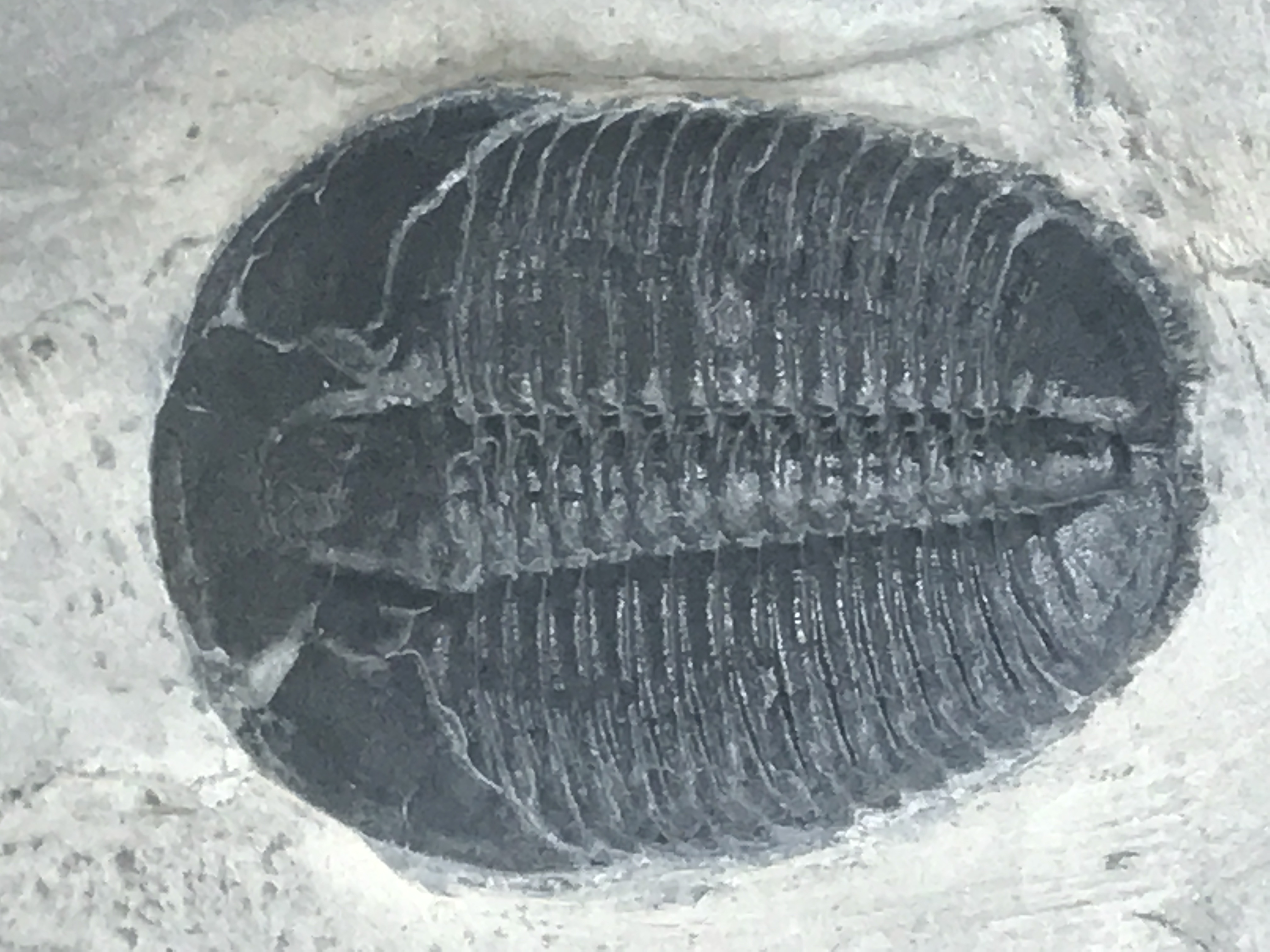
Insects
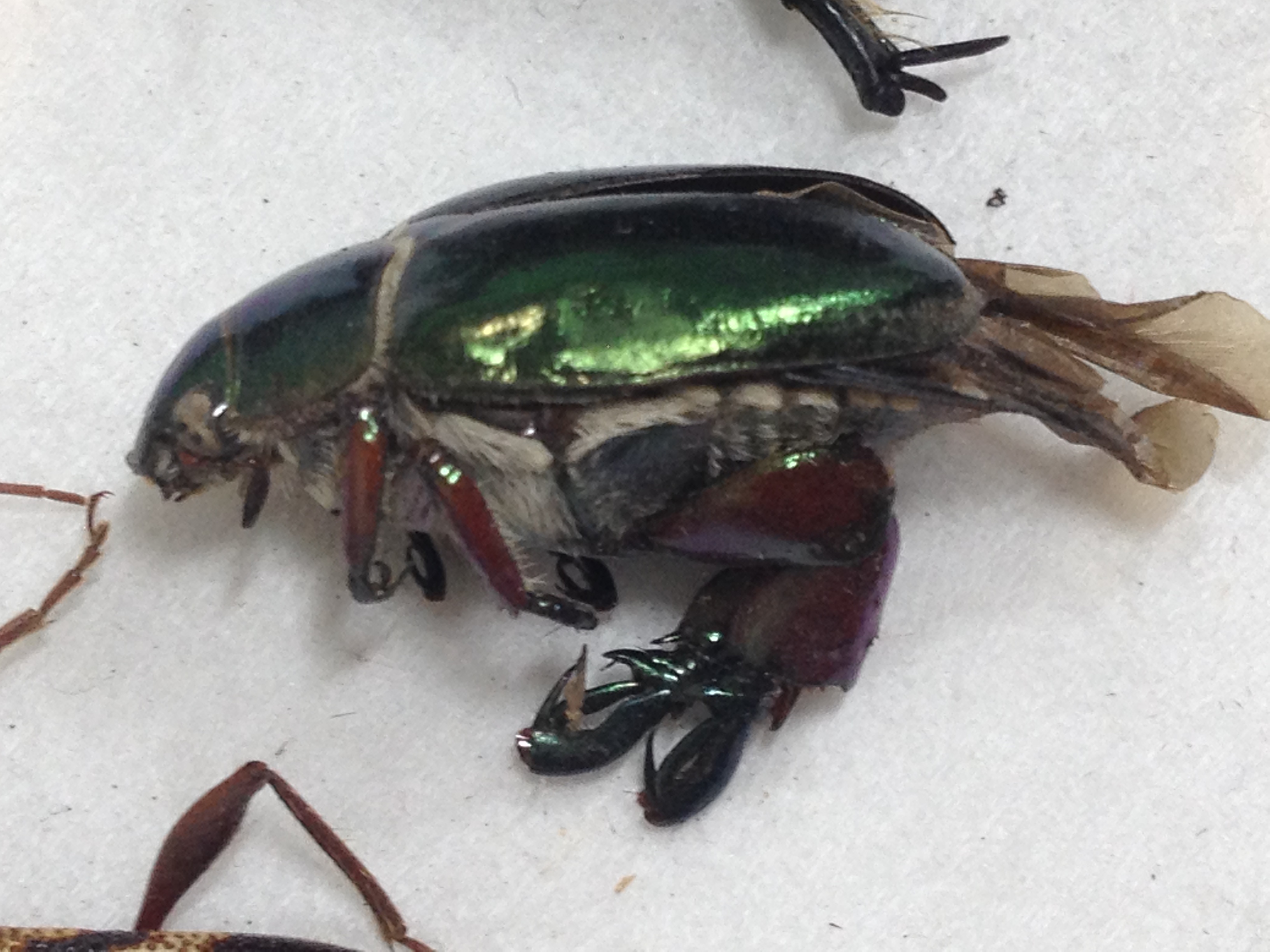
In 2003 while travelling in South America I used a Canon 35mm SLR film camera to photograph butterflies. I scanned the photos, so you might see the odd speck of dust! I had the most success in the Bolivian Amazon, particularly in two locations: Madidi National park in Northern Bolivia, and in vicinity of Intiwarriyassi, a wildlife refuge located East of Cochabamba. Included are many exotic types as Morphos, owl butterflies and metalmarks.
Other butterflies in my photography collection include a small selection of Australian species, including some rarities (moth butterfly, Regent Skipper), and some beauties (Red lacewing, Cairns birdwing).
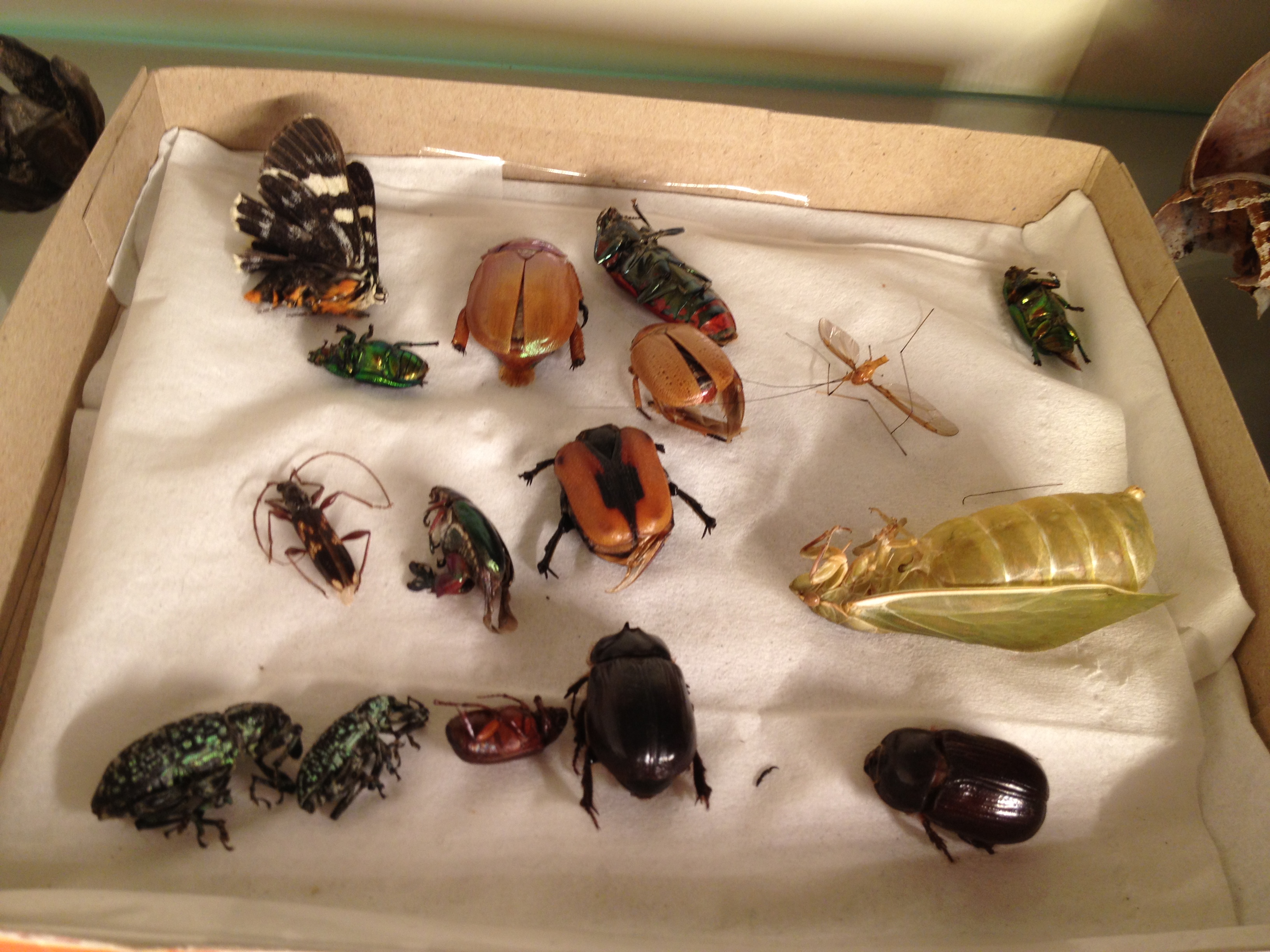
Several specimens are on display in the cabinet. These were mostly found while on holiday near Mount Buffalo in central Victoria during a particularly hot summer. Many insects had perished from the heat. In addition there are a few photographs of amazing rainforest species from my trip to South America.
Millipedes, dragonflies, caterpillars. My favorite is a multicolored caterpillar from South America. I have turned the photograph upside down because it looks like it has a lot of attitude like that!
Three other bones I have found also appear likely to have belonged to small whales or dolphins, and are all interesting in their own way. One is in very good condition and has a beautiful oval cross section. One is almost circular in cross section, and the third, while in poor condition, appears to be the terminal part that would have joined to the spine.
Continue to the photo gallery »
Rocks and minerals
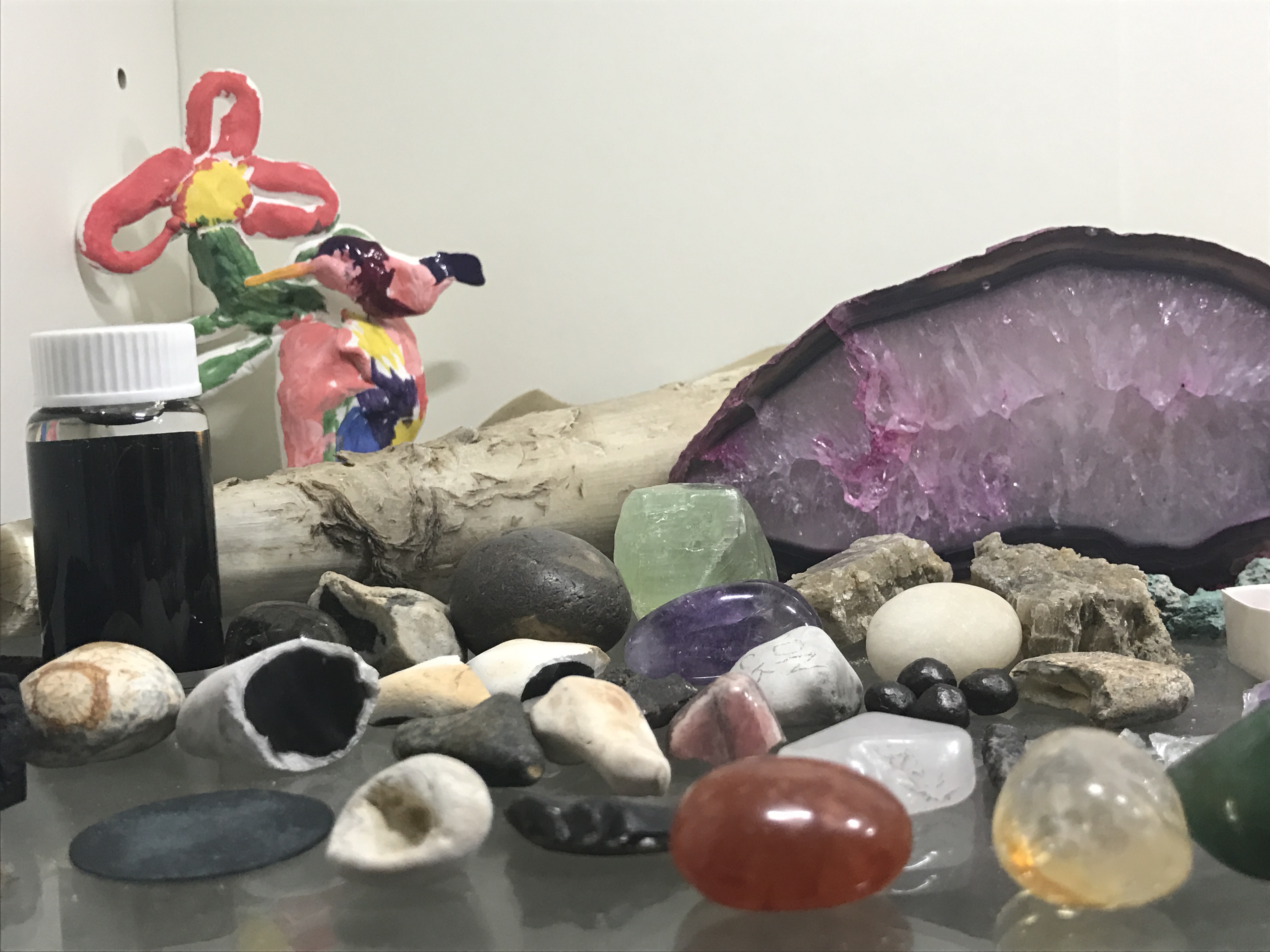
A small nugget of gold
Flint, some that look like they may have been used as flake tools by prehistoric people
Pumice, volcanic froth, light as a feather. I found it on a beach near Byron Bay, Queensland
Continue to the photo gallery »
Shells and coral
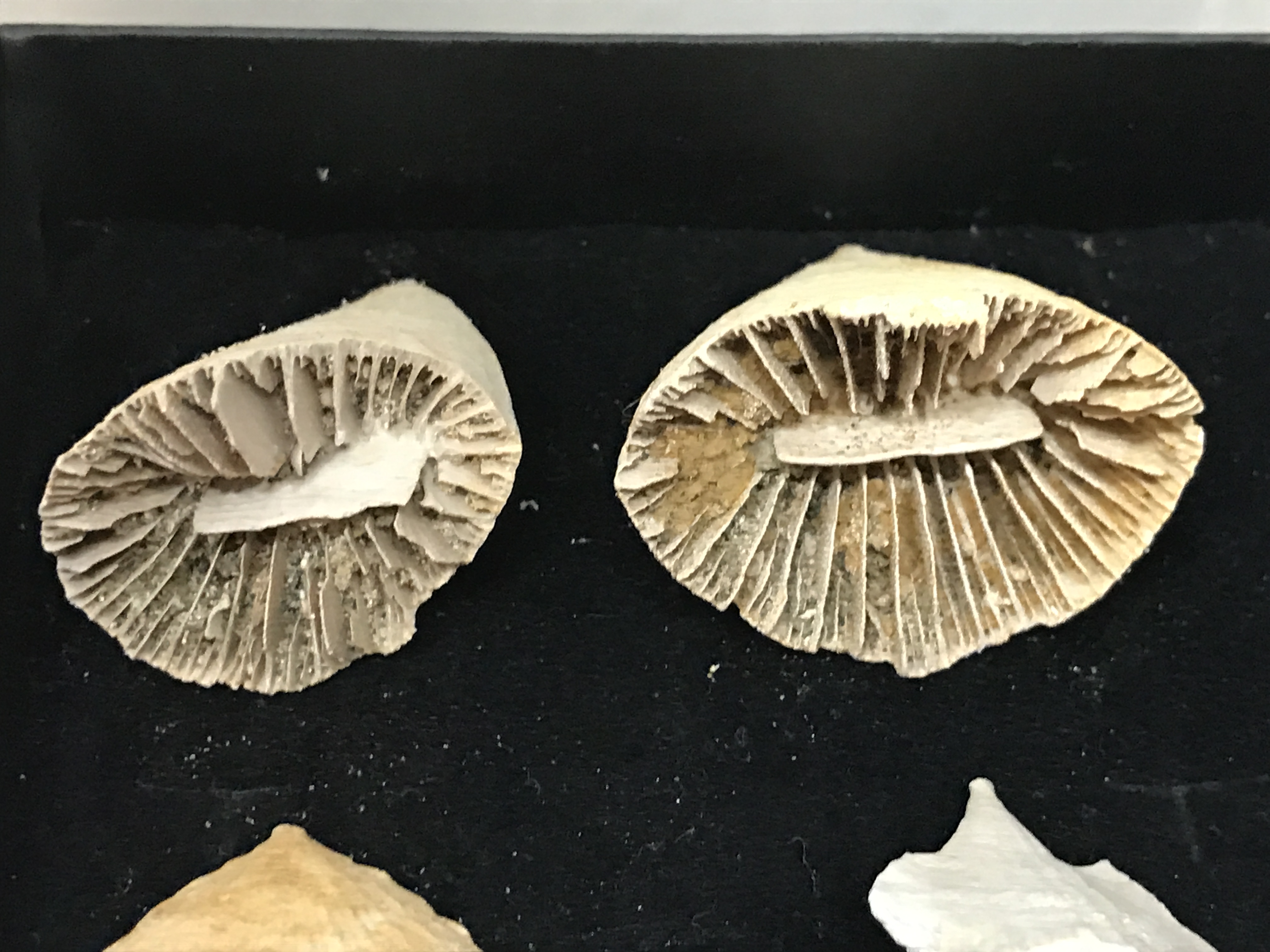
I have lots of different shells from lots of different beaches around Australia. I found many of them a long time ago, so I can't really remember where they all came from.
Several different species of shark egg cases. Crab shells, a Morton Bay bug, a tiny puffer fish, barnicles, cuttle bones, starfish and sea urchins. My favourite sponge looks like Shrek's ear. I think it is actually called an ear sponge. A few pieces of coral.
Continue to the photo gallery »
Snakes, birds and mammals
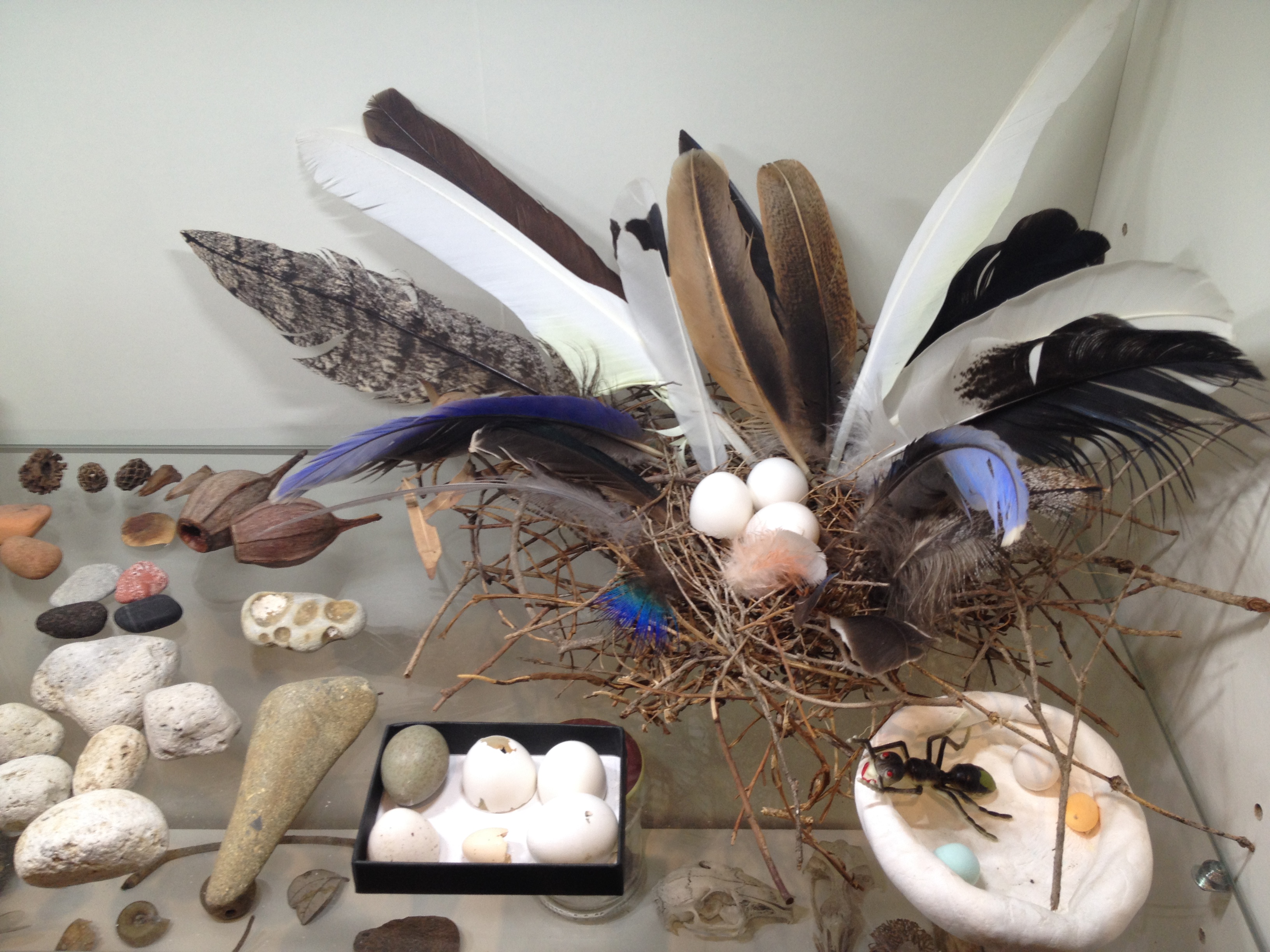
I collected two teeth from an alligator skull that I found on a river bank in Bolivia. I have two small skulls, one that is clearly a bird, while the other is a rabbit. There are also a couple of jaw bones that belonged to small rodents (probably a rat). I have a big piece of polished bone I found on a beach - I have no idea really whether it is a fragment of whalebone or just a cow from a local farm, but it has an amazing colour and texture from its time in the surf.
Birds nest regularly in our back yard. We collect eggs that we find on the ground, usually after the bird has hatched, but sometimes they have fallen from the nest and gone cold. All but one are white and I think belong to native doves, while one is blue and I haven't a clue what sort of bird laid it. The nest was abandoned by a dove at the end of one nesting season. I haven't collected many feathers, but this small brightly colored one makes me think I should look out for a few more!
One morning while out jogging I found this huge snake skin on the footpath about 200m from my house. Concerned that the snake must have only just shed it, I continued on my way. When it was still there on my way back I decided it would make a great addition to my collection, though I was still quite snake-wary while picking it up! The snake had obviously rolled the skin away from itself, so while it was still soft and moist (and stinky I might add!) I carefully unrolled it, though half of it still remains inside out. It is nearly 2.5m long and belonged to a tiger snake, one of the most poisonous species in Australia. It is complete, even including thin patches of skin that covered the eyes. I didn't know snakes shed their eye-skin. Well there you go.
An antler from a deer and a horn from a bull. Not from nature, but quite amazing to look at and to hold. The antler is much heavier than I thought it would be, as it is solid bone. It also has a very unusual shape around where it joined the skull, that looks almost exactly like the base of kelp seaweed where it anchors on to rocks.